
Is Multi-Generational or Shared Living Right for You?

Updated: Jun 12

How to Make the Decision
As housing costs rise, childcare becomes more expensive, and many families seek stronger support systems, multi-generational and shared living arrangements are becoming increasingly popular. But deciding whether to share a home with family members or another household is a significant life decision that deserves careful consideration.
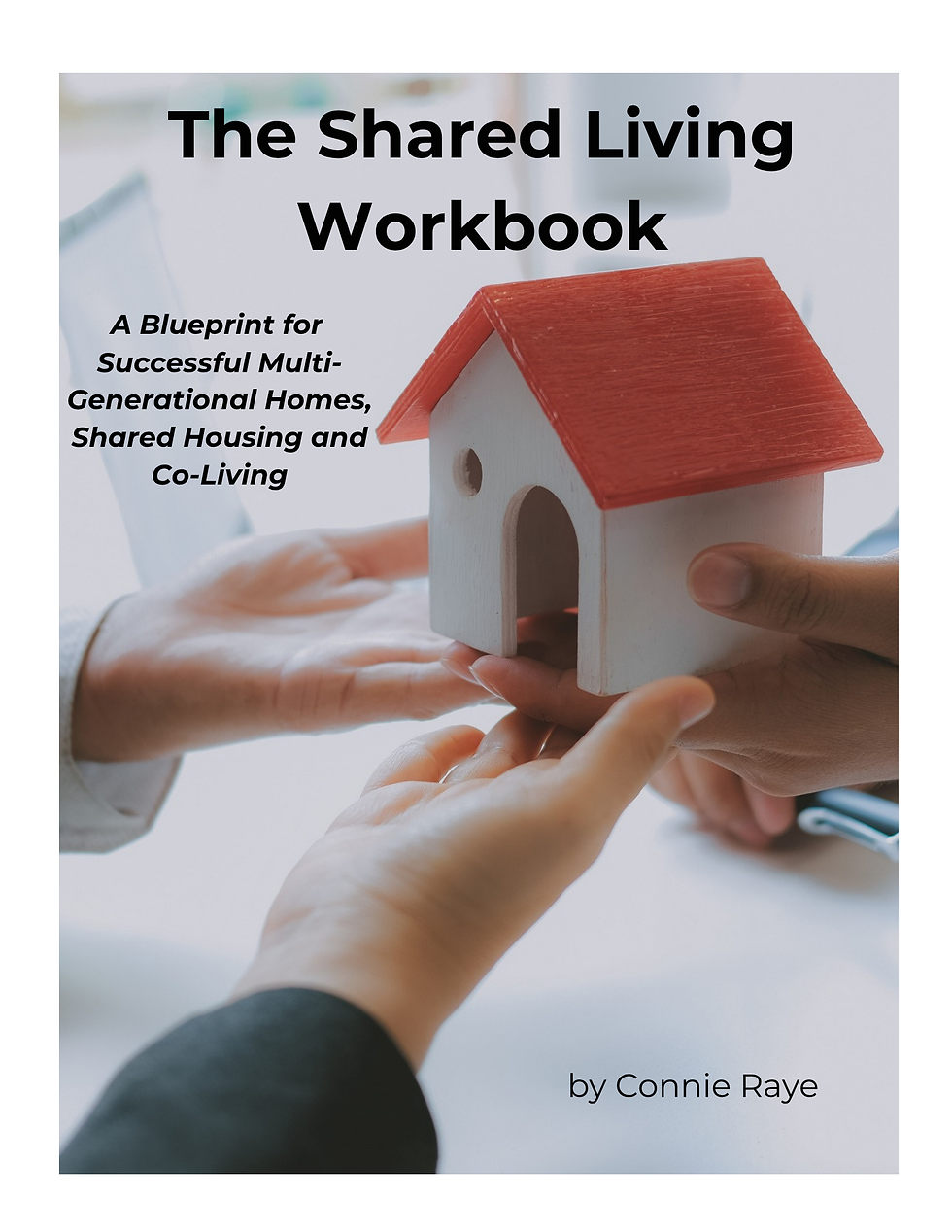
While shared living can offer financial savings, emotional support, and stronger family connections, it's not the right fit for every situation. Before making the move, it's important to evaluate both the benefits and the challenges. The Shared Living Workbook is your best chance to help with the decision making. Available now!
Many families are discovering that living together offers advantages that go far beyond saving money.
Shared living can provide:
Reduced housing expenses
Shared utility and grocery costs
Childcare support
Assistance with aging parents
Greater emotional support
Increased family connection
Shared household responsibilities
Enhanced safety and companionship
For some families, shared living is a practical solution. For others, it's a lifestyle choice that creates deeper relationships and a stronger sense of community.
Ask Yourself: Why Are We Considering Shared Living?
Before making any decisions, identify the primary reasons for considering a shared living arrangement.
Are you hoping to:
Save money?
Help aging parents?
Receive childcare assistance?
Reduce loneliness?
Share responsibilities?
Create a stronger family support network?
Understanding your "why" helps ensure everyone is working toward the same goals.
Successful shared living depends as much on relationships as it does on finances.
Ask yourself:
How well do we communicate?
Can we discuss difficult topics respectfully?
Are expectations generally clear?
How do we handle disagreements?
Are we willing to compromise?
Even families with strong relationships benefit from having honest conversations before moving in together.

Evaluate Space and Privacy Needs
One of the most common concerns in shared living is privacy.
Consider:
Will everyone have personal space?
Are there enough bedrooms and bathrooms?
Is there space for remote work or studying?
Can family members enjoy quiet time when needed?
A successful shared home balances togetherness with personal independence.
Discuss Finances Openly
Money is one of the most important conversations you'll have.
Topics to discuss include:
Rent or mortgage contributions
Utilities
Groceries
Home maintenance
Emergency expenses
Savings goals
Clear financial expectations help prevent misunderstandings and resentment later.
Think About Daily Life
Imagine a typical day in your future shared household.
Who will:
Cook meals?
Clean common areas?
Handle laundry?
Care for children?
Assist aging family members?
Manage household schedules?
The more clarity you create upfront, the smoother daily life becomes.
Be Honest About Potential Challenges
Shared living isn't always easy.
Potential challenges include:
Different lifestyles
Noise levels
Parenting differences
Household habits
Personal boundaries
Decision-making responsibilities
Acknowledging challenges doesn't mean shared living won't work. It simply allows you to prepare for them.
Signs Shared Living Might Be a Good Fit
Shared living may be right for you if:
✔ Family members genuinely enjoy spending time together
✔ Everyone is willing to communicate openly
✔ Financial goals align
✔ Expectations can be discussed honestly
✔ Personal boundaries are respected
✔ Household responsibilities can be shared fairly
✔ Family members view the arrangement as a partnership
Signs You Need More Planning
Shared living may require additional preparation if:
Financial expectations are unclear
Boundaries haven't been discussed
Household responsibilities are undefined
Communication is difficult
Family members have different goals for the arrangement
These issues don't necessarily mean shared living won't work—they simply highlight areas that deserve attention before moving forward.
The Most Important Decision-Making Tool: Communication
The families who thrive in shared living arrangements aren't necessarily those with the biggest homes or the highest incomes.
They're the families who communicate clearly, establish expectations, and create systems that help everyone succeed.
A little planning before moving in can prevent countless frustrations later.
Ready to Explore Shared Living?
If you're considering multi-generational or multi-family living, don't leave important conversations to chance.
My Shared Living Workbook was designed to help families work through the key topics that determine success, including:
Household expectations
Financial planning
Privacy and boundaries
Chore responsibilities
Family communication
Conflict resolution
Shared goals and vision
By having these conversations before moving in together, families can create a stronger foundation and increase the likelihood of a positive shared living experience.
Because successful shared living doesn't happen by accident—it happens through thoughtful planning, open communication, and a commitment to building a home where everyone can thrive.


Comments