
Tips for Successful Multi-Generational or Shared Living

Updated: Jun 12
Living in a multi-generational household can be both rewarding and challenging. As families evolve, many are choosing to live together under one roof, whether for financial reasons, caregiving, or simply to strengthen family bonds. However, this arrangement requires careful planning and communication to ensure harmony among all generations. Here are some practical tips to help you navigate the complexities of multi-generational living successfully.

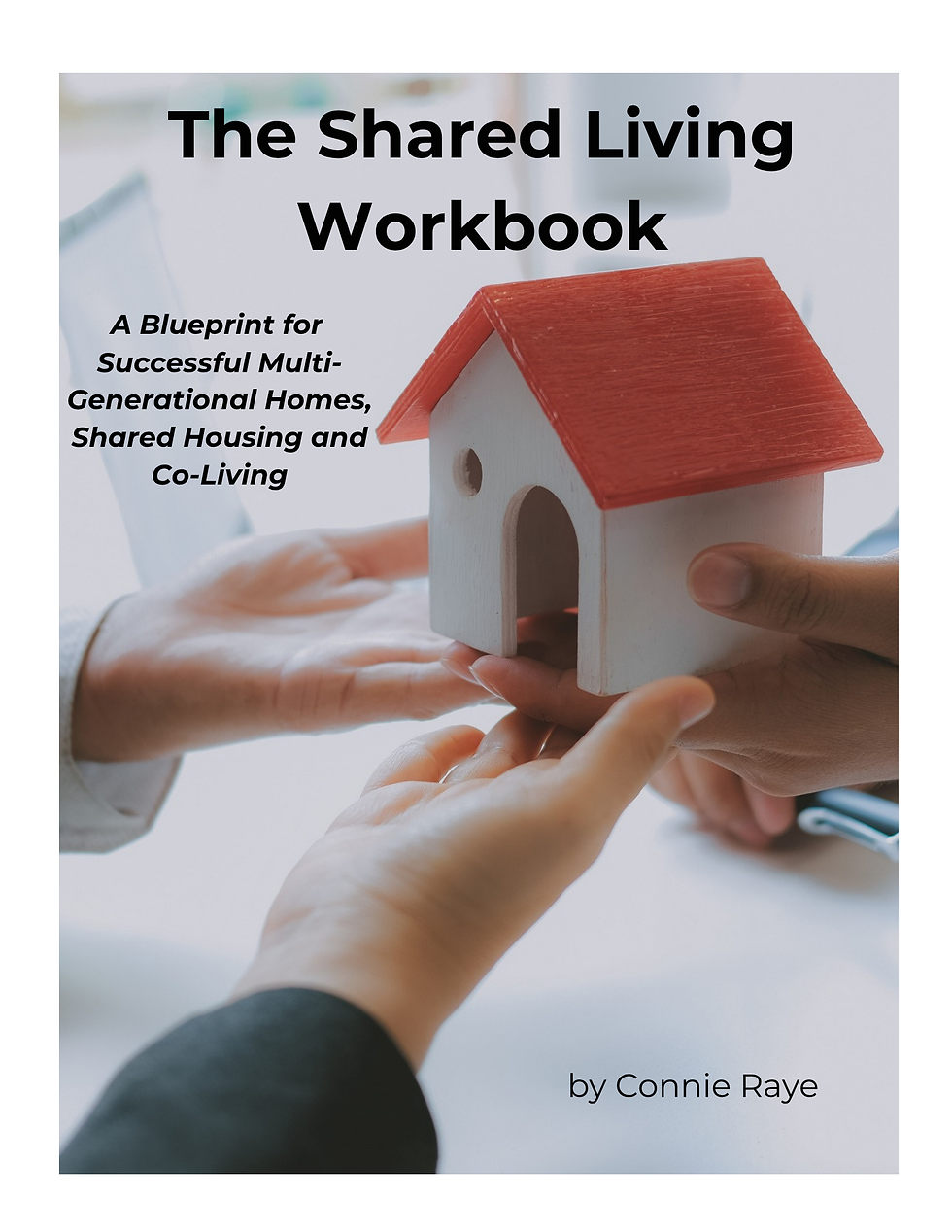
For more detail on tips, check out The Shared Living Workbook. It will give you all the planning tools necessary for successful shared living.
The three main advantages of living with multiple generations or multiple families.
Financial Savings
One of the most significant benefits is the potential for financial savings. Sharing expenses such as rent or mortgage, utilities, and groceries can ease the financial burden on all family members.
Emotional Support
Living together fosters a sense of community and emotional support. Grandparents can provide wisdom and guidance, while younger generations can offer energy and fresh perspectives. This mutual support can enhance the overall well-being of the family.
Childcare/Elder Care Assistance
For families with young children, having grandparents or other relatives around can be a tremendous help. They can assist with childcare, allowing parents to work or take time for themselves. On the other hand, when the time comes for the grandparents to need assitance, a shared family home can provide all the love and care needed.
Tips for Navigating Shared Living
Establishing Clear Communication
Effective communication is the cornerstone of any successful relationship, and it’s especially crucial in a multi-generational household. Here are some strategies to improve communication:
Regular Family Meetings
Schedule regular family meetings to discuss household matters, share updates, and address any concerns. This practice encourages open dialogue and helps prevent misunderstandings.
Set Boundaries
It’s essential to establish boundaries regarding personal space and privacy. Discuss what is acceptable and what is not, ensuring everyone feels comfortable in their living environment.
Use Technology Wisely
Leverage technology to stay connected. Group chats or family calendars can help everyone stay informed about events, schedules, and responsibilities.
Creating a Functional Living Space
Designing a living space that accommodates multiple generations requires thoughtful planning. Here are some tips to create a functional and harmonious environment:
Designate Private Spaces
Ensure that each family member has their own private space. This could be a separate bedroom or a quiet corner in the house where they can retreat when needed.
Shared Common Areas
Create inviting common areas where family members can gather. A comfortable living room or a spacious kitchen can serve as the heart of the home, promoting interaction and bonding.
Consider Accessibility
If older family members are living with you, consider their needs for accessibility. This might include installing grab bars in bathrooms, ensuring that living spaces are on one level, or providing easy access to frequently used items.
Balancing Responsibilities
Sharing a home means sharing responsibilities. Here’s how to ensure that everyone contributes fairly:
Create a Chore Chart
Develop a chore chart that outlines household responsibilities. This chart can help distribute tasks evenly and ensure that everyone is contributing to the upkeep of the home.
Encourage Independence
While it’s essential to share responsibilities, encourage independence among family members. Allow older generations to maintain their routines and responsibilities, while younger members can take on more household tasks.
Celebrate Contributions
Recognize and celebrate each family member’s contributions, no matter how small. This acknowledgment fosters a sense of belonging and appreciation within the household.
Navigating Conflicts
Conflicts are inevitable in any living situation, but they can be managed effectively. Here are some strategies for conflict resolution:
Address Issues Promptly
When conflicts arise, address them promptly rather than letting them fester. Open and honest discussions can help resolve issues before they escalate.
Practice Empathy
Encourage family members to practice empathy by considering each other’s perspectives. Understanding where someone is coming from can help diffuse tension and lead to more productive conversations.
Seek Compromise
In situations where disagreements occur, aim for compromise. Finding a middle ground can help maintain harmony and ensure that everyone feels heard.
Fostering Family Traditions
Creating family traditions can strengthen bonds and create lasting memories. Here are some ideas for traditions that can be embraced in a multi-generational household:
Family Dinners
Establish a family dinner regularly where everyone can come together to share a meal and catch up. This tradition fosters connection and provides an opportunity for everyone to contribute their favorite dishes.
Seasonal Celebrations
Celebrate holidays and seasonal events together. Whether it’s decorating for the holidays or hosting a summer barbecue, these shared experiences can enhance family unity.
Embracing Flexibility
Living with multiple generations requires a degree of flexibility. Here are some ways to embrace adaptability in your household:
Be Open to Change
As family dynamics evolve, be open to changes in routines and responsibilities. Flexibility can help accommodate the needs of different generations.
Adjust Expectations
Recognize that not everyone will have the same lifestyle or preferences. Adjust your expectations and be willing to compromise to create a harmonious living environment.
Encourage Personal Growth
Support each family member’s personal growth and development. Encourage pursuits that align with their interests and passions, fostering a sense of individuality within the family unit.
Conclusion
Multi-generational living can be a fulfilling experience when approached with intention and care. By establishing clear communication, creating functional spaces, balancing responsibilities, and fostering family traditions, you can cultivate a harmonious environment that benefits everyone involved. Embrace the unique opportunities that come with living together, and remember that the key to success lies in understanding, respect, and love.
As you embark on this journey, consider how you can implement these tips in your own home. The rewards of multi-generational living can be profound, enriching the lives of all family members involved. Get the Shared Living Workbook to lead you to successful shared living. The Shared Living Workbook


Comments